Catechol Degradation in Soil
Overview
Lab study testing whether catechol (a BTEX-related aromatic compound) can be removed from soil under extreme high-pH, heavy-metal conditions where microbial biodegradation is normally infeasible — comparing chemical/physical adsorption against integrated microbial removal.
Key points
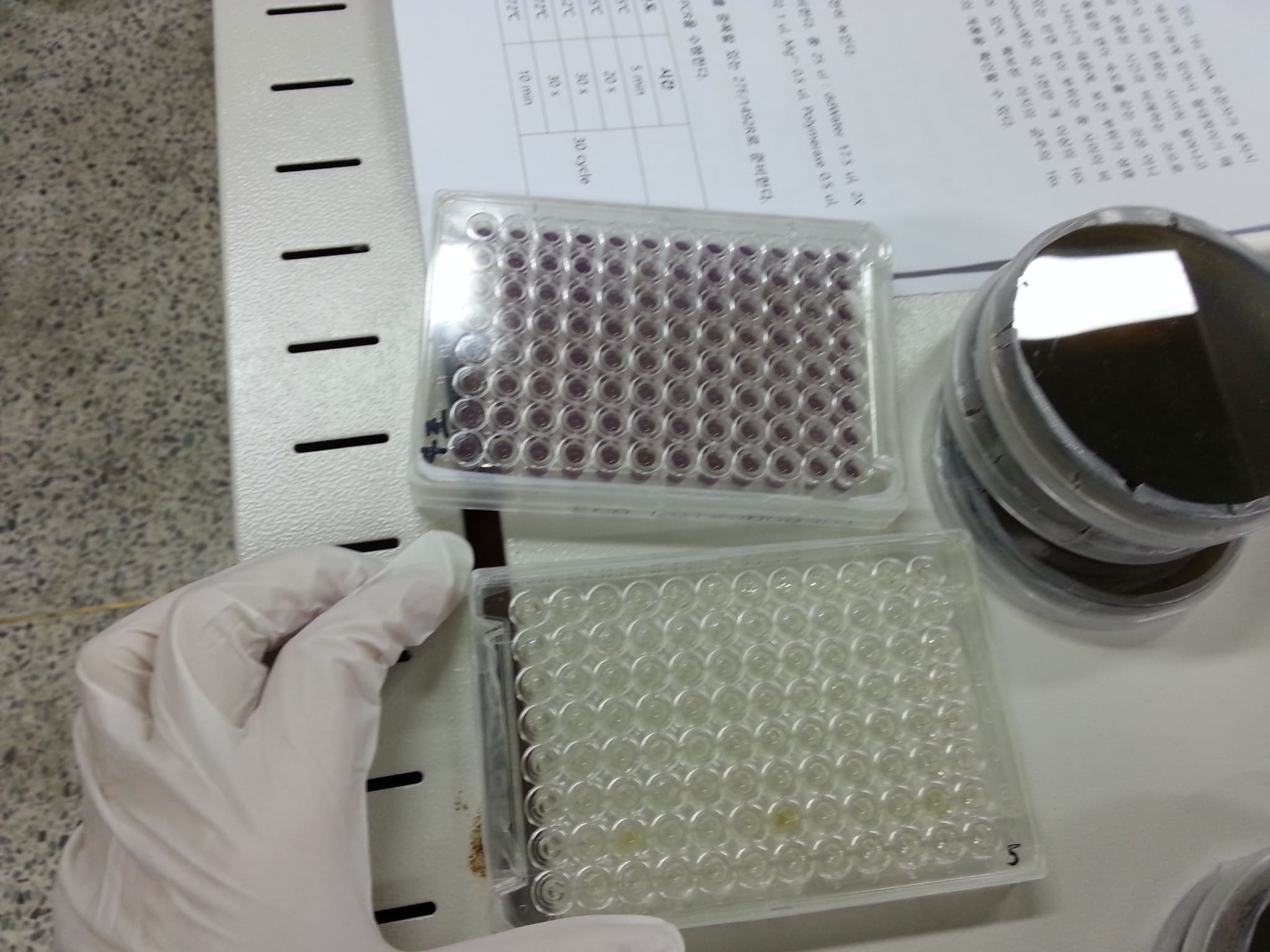
- Sampled composting-site soil; characterized texture, moisture, pH, total nitrogen and phosphorus; profiled microbial carbon-source use with Ecoplates.
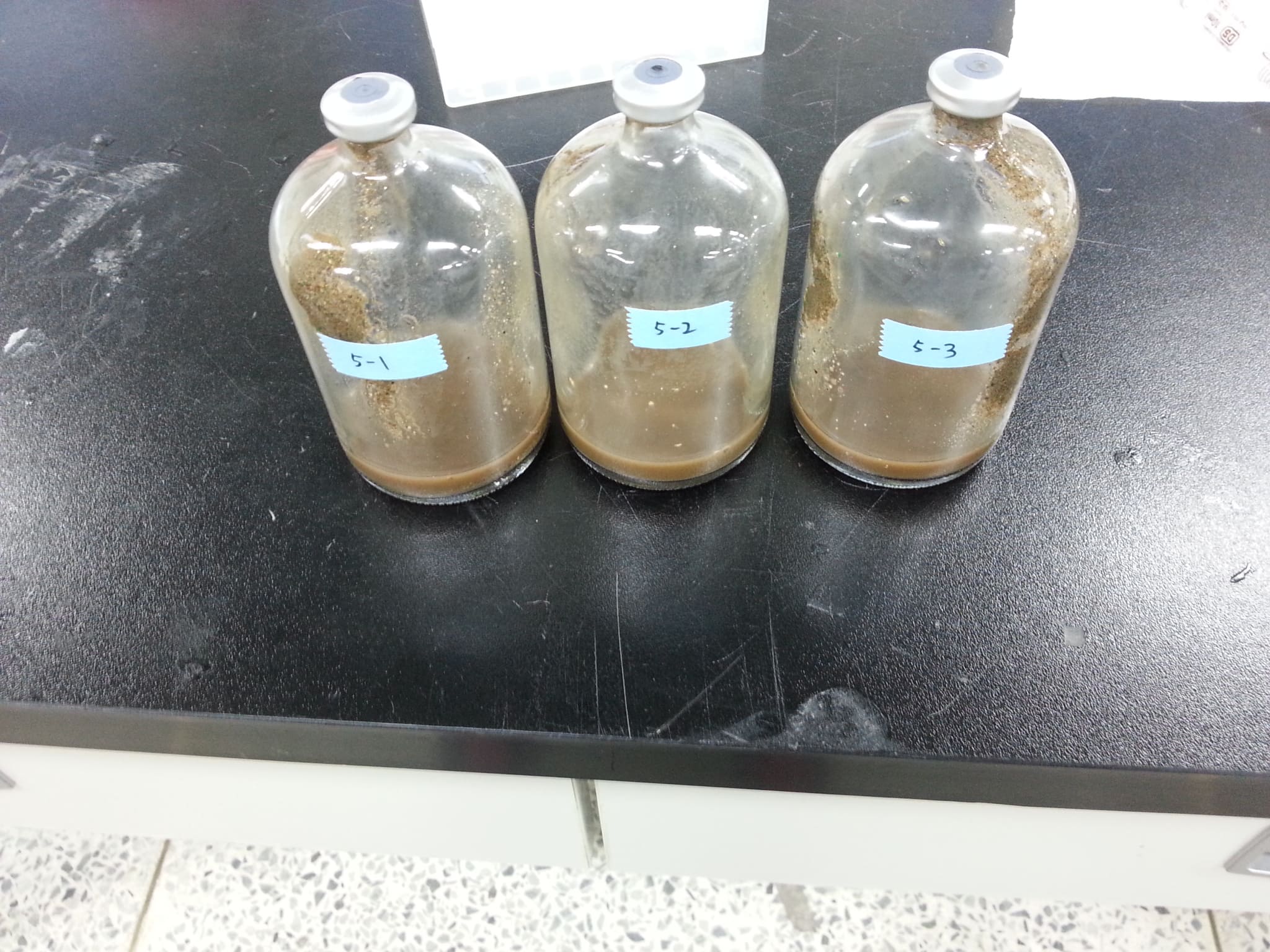
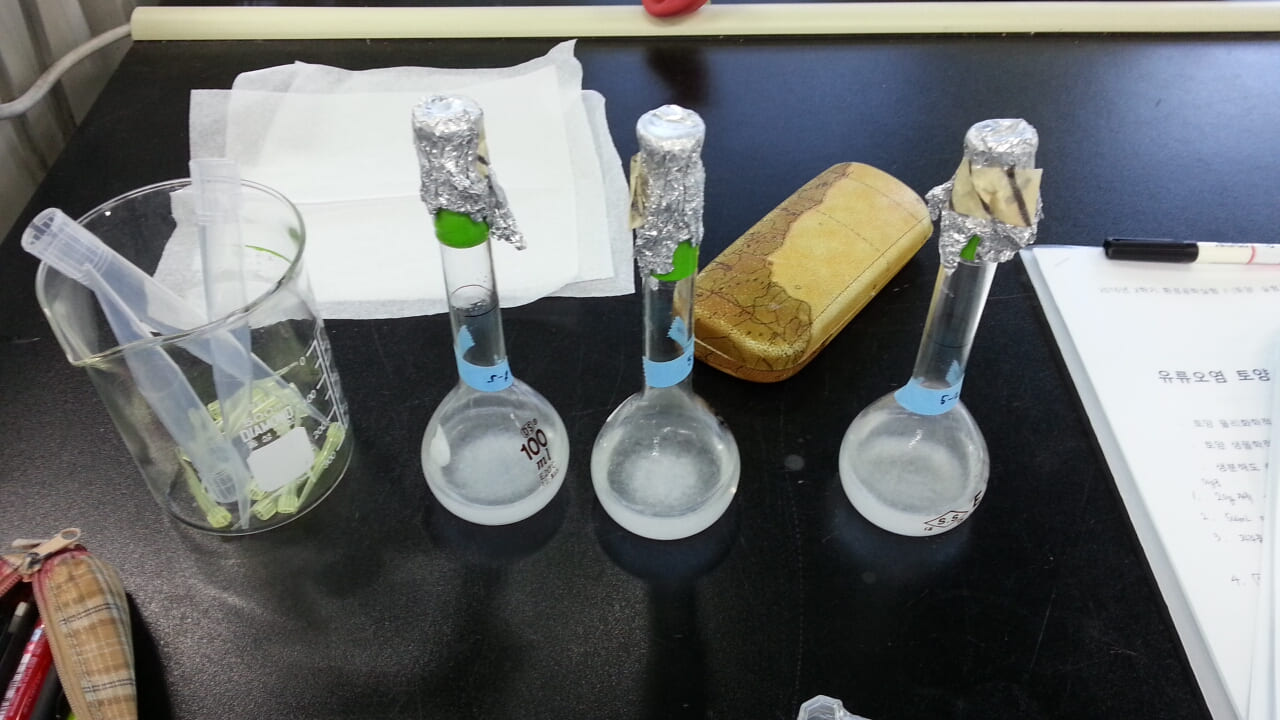
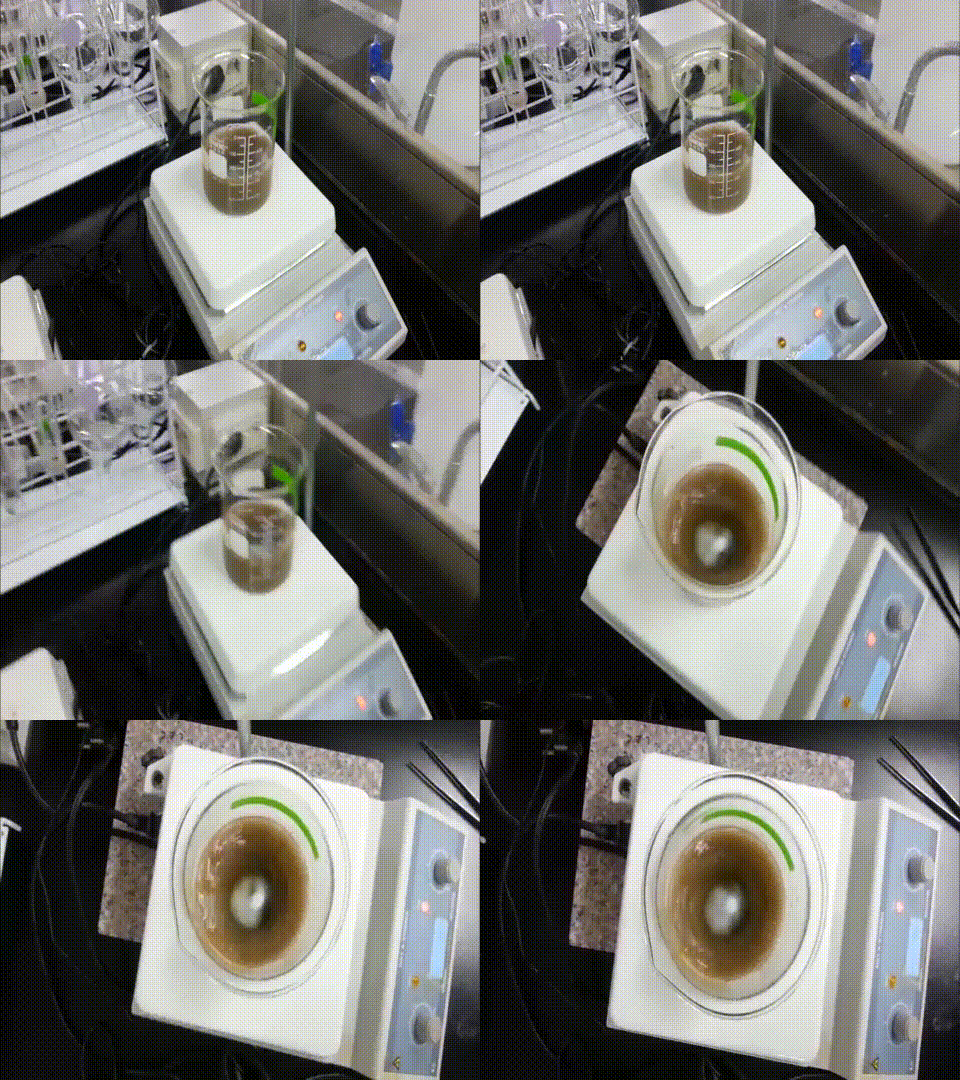
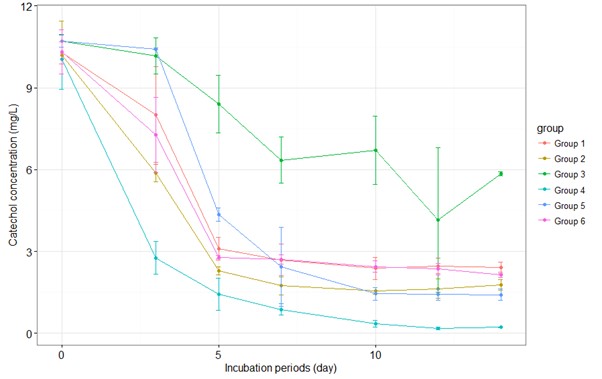
- Built six microcosms (soil + BH medium + 5 mM catechol); tracked degradation by UV absorbance at 230 nm against a calibration curve.
- A pH-11, metal-rich, phosphorus-free microcosm served as an essentially abiotic (chemical/physical) control.
- Chemical adsorption (e.g., Fe(OH)₃ complexes) increased with pH while physical adsorption decreased.
- Purely physical/chemical removal was nearly comparable to the microbial-inclusive process.
Figures